
Chapter 3
Conclusion
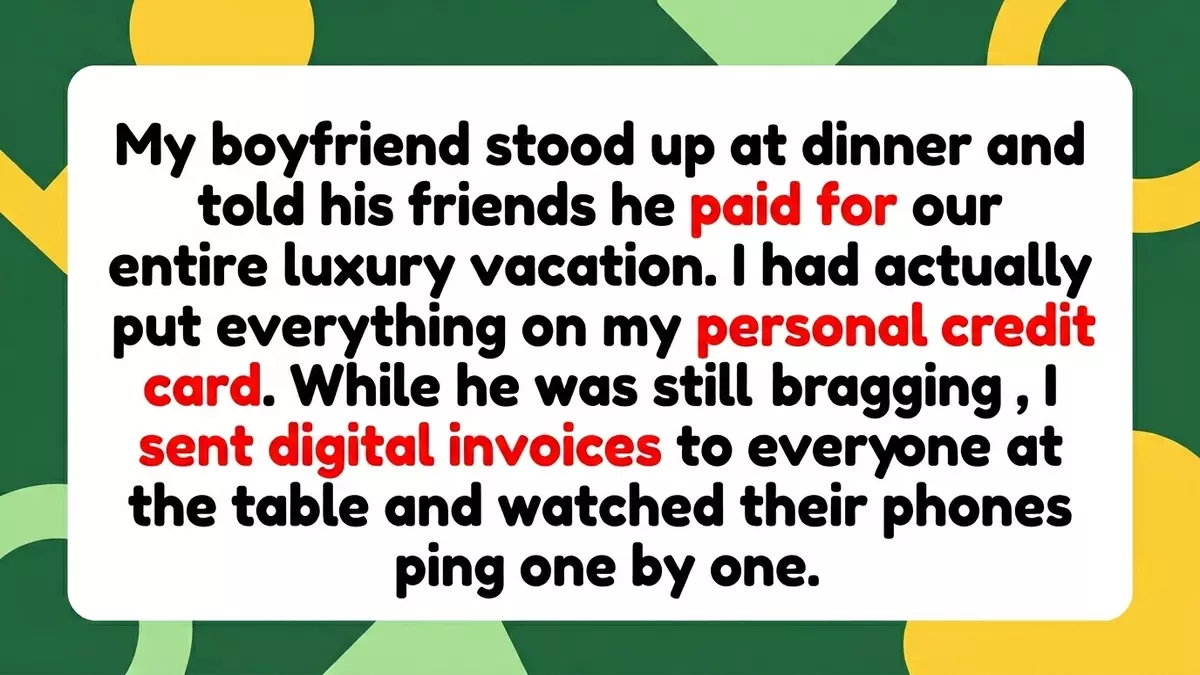
Standing up for one's worth in a relationship can sometimes require drastic measures, especially when faced with public disrespect. While the woman's decision to invoice the guests shattered the peace of the vacation, it established an uncompromising boundary against exploitation. Relationships cannot survive without basic honesty and mutual respect; when a partner values social clout over truth, an itemized reality check is sometimes the only appropriate response.
Frequently Asked Questions
What drives a partner to lie about financial generosity?
This behavior is usually rooted in an intense need for social validation and low self-esteem. The individual attempts to construct a grand persona of wealth and success to gain power or admiration within their peer group, even if it means actively minimizing their partner's real contributions.
How can group trip organizers protect themselves from financial liability?
Organizers should avoid putting their personal finances on the line for large groups. Use platforms where individual travelers must pay the venue directly, or mandate that all funds must be transferred to a central account before any non-refundable bookings are locked in.
Is taking credit for a partner's work considered a form of emotional abuse?
While a single isolated incident may simply be an instance of poor judgment, a consistent pattern of taking credit for a partner's labor, minimizing their value, and distorting financial truths to make them look inferior is a recognized form of emotional manipulation and psychological control.
How should friends react when caught in the middle of a couple's financial dispute?
Friends caught in this situation should remain neutral but prioritize absolute fairness. In this specific case, the correct action for the guests is to immediately pay the invoice to the person who actually funded the trip, while avoiding taking sides in the romantic fallout.
Can a relationship recover after a public betrayal of trust like this?
Recovery is incredibly difficult because the betrayal occurred publicly and involved deliberate deceit. For a relationship to survive this level of trust erosion, the offending partner must genuinely acknowledge their insecurity, apologize without defensiveness, and commit to long-term transparency and counseling.