
Chapter 3
Should you apologize for actions you took as a child?
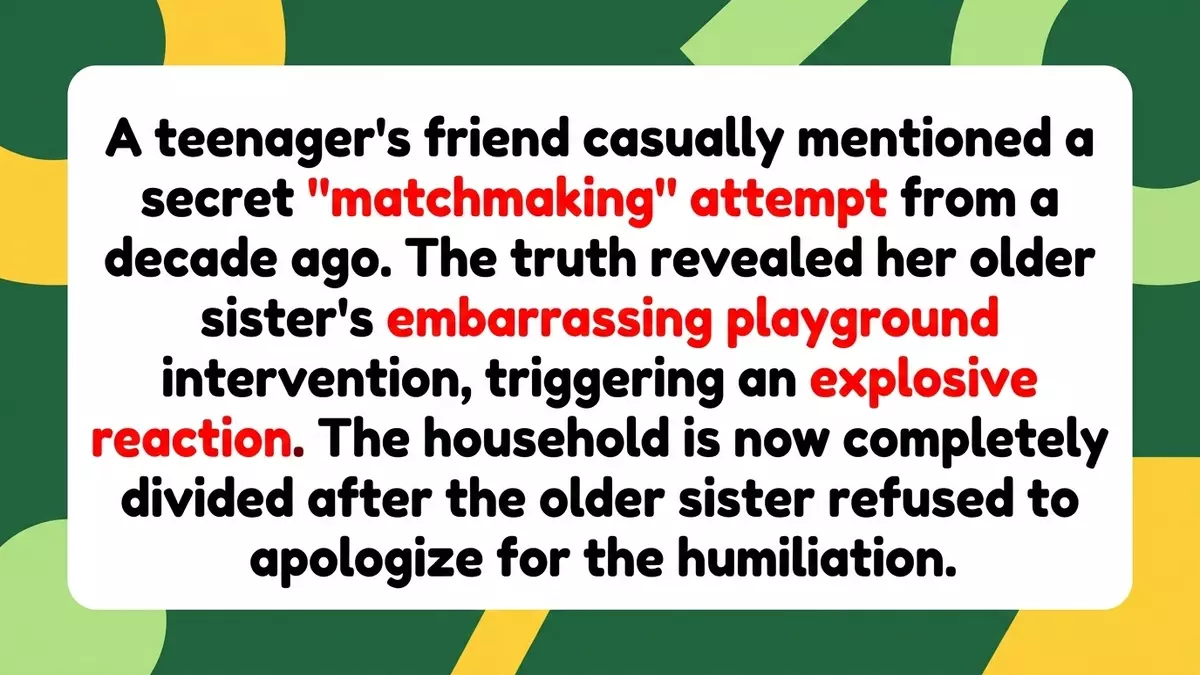
While you aren't responsible for having adult wisdom as a child, apologizing as an adult isn't about changing the past—it's about acknowledging the impact your actions have on someone today. A brief, lighthearted apology can validate the other person's feelings without making you look bad.
How can families resolve arguments over old memories?
The best approach is to separate the intent of the past from the impact in the present. The family should acknowledge that the older sibling meant no harm as a 10-year-old, while the older sibling should recognize that the younger sibling's current embarrassment is valid.
What is the best way to handle retroactive embarrassment?
Humor is often the most effective tool for neutralizing old embarrassment. Reframing the event as a silly, predictable childhood trope can help take away its power. If the crush is a close friend today, laughing about how ridiculous kids can be can clear the air instantly.
When should a family member drop an issue instead of demanding an apology?
If the offending party has clearly explained their lack of malicious intent and the situation does not cause ongoing harm, safety risks, or systemic disrespect, it may be best to drop the issue to avoid creating a permanent rift over a minor historical disagreement.