
Chapter 3
-
Enforce a Strict "No Advance, No Event" Policy: Never provide your credit card information to a venue or vendor under a loose verbal agreement. If you choose to gift money for a milestone, define a flat, capped cash amount upfront: "I am willing to contribute exactly $500 toward your cake. I will not be signing the master venue contract."
-
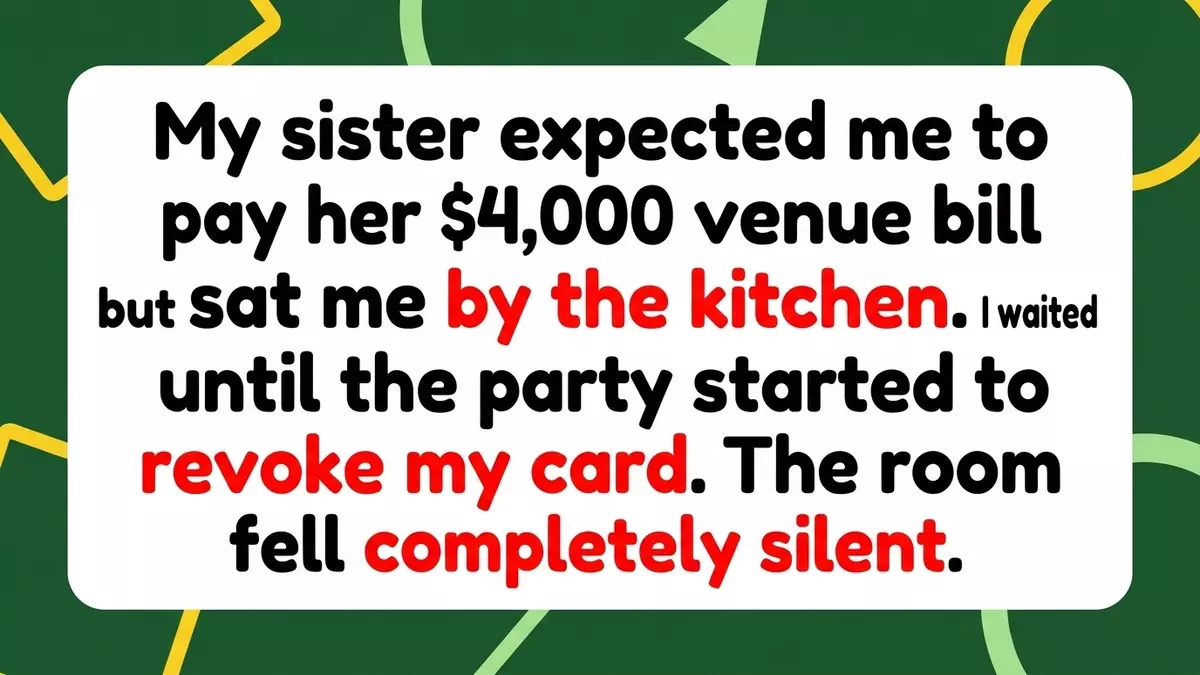
Match Disrespect with Immediate Withdrawal: If you agree to fund an event or a project as a favor and the recipient treats you with active malice or exclusion, you have every right to revoke your funding. You are under no moral obligation to finance your own mistreatment.
-
Refuse to Save Them from Self-Inflicted Drama: When a venue shuts down an event due to a non-payment, let the individuals who organized the party face the natural social consequences. Do not allow frantic phone calls from panicking parents to guilt you into reversing a boundary that you had every right to establish.
Frequently Asked Questions
1. Do wedding venues typically allow mid-event cancellations over payment?
It is highly unusual for a commercial event venue to allow a massive party to begin without securing the vast majority of the funds upfront. Standard industry practice requires a substantial, non-refundable deposit upon booking, with the remaining balance paid in full anywhere from 7 to 30 days before the date of the event to protect the business from non-paying clients.
2. Is it legal to revoke financial funding for an event at the last minute?
If your name is not on the primary legally binding contract with the venue, you have no legal obligation to pay the business, and you can withdraw your financial support at any time. However, if you signed a formal contract as a guarantor or payor, you are legally responsible to the venue for the total balance, regardless of any interpersonal drama with your family.
3. Why are seating arrangements at family events such a common source of conflict?
Seating charts at major events like weddings, engagement parties, and reunions are highly visible expressions of social status and familial closeness. Being placed at the head table signals honor, intimacy, and respect, while being relegated to a back corner or near a kitchen door is universally recognized as a subtle, public snub indicating lower importance.
4. How do you handle a family member who treats your income as communal money?
The most effective approach is total transparency and strict financial segregation. Stop discussing your earnings, savings, or major purchases with relatives. If an unreasonable request for funding is made, issue a brief, polite, and unarguable refusal: "That doesn't fit into my personal household budget this year, so I won't be able to contribute."