
Chapter 2
The Psychology of Social Loafing and Friendship Boundaries
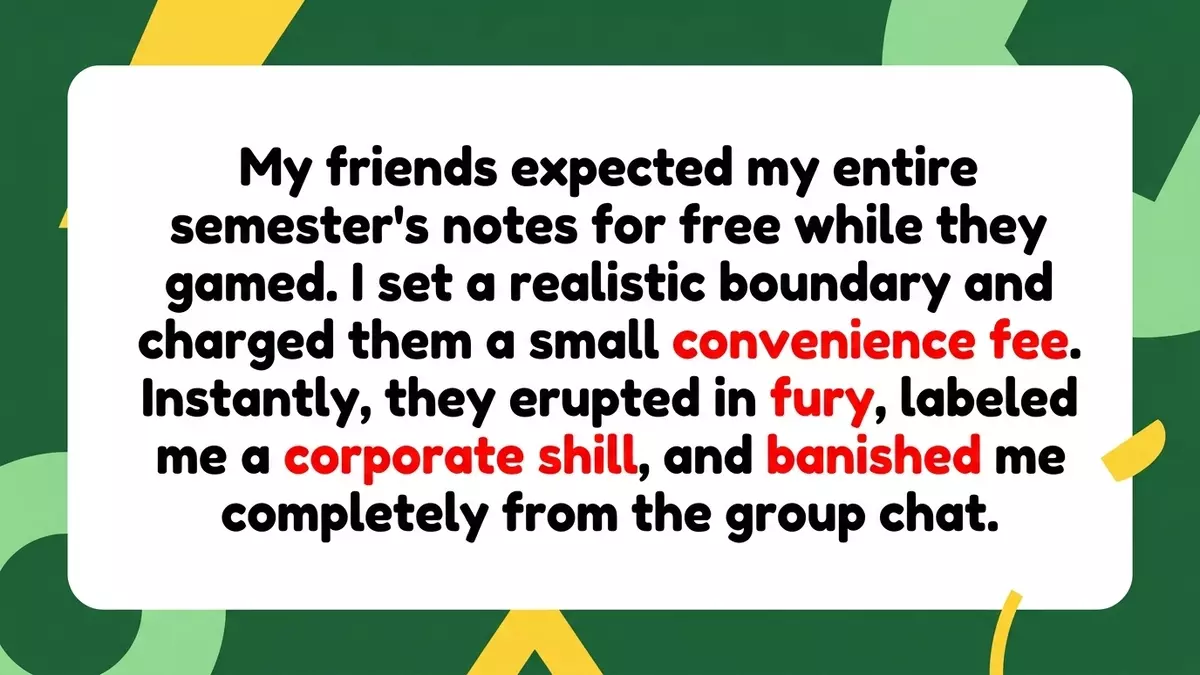
Watching years of late-night camaraderie dissolve over a set of macroeconomics notes shows just how quickly social dynamics can sour when explicit boundaries are drawn.
Understanding Social Loafing
What this student experienced is a classic case of social loafing. This is a psychological phenomenon where individuals exert significantly less effort on a task because they confidently expect others to carry the weight for them.
Social loafing frequently manifests in study groups, group projects, and close friendship circles where one or two people do the heavy lifting while the rest coast on their labor under the guise of loyalty.
By refusing to hand over his notes for free, the student established a clear personal boundary. Setting limit-setting behaviors can be incredibly difficult, especially when a friend group's culture normalizes shared assets and collective benefits. However, establishing these parameters is essential for preventing deep-seated resentment, even if it initially causes discomfort or social pushback.
[Academic Neglect / Social Loafing] ──> [Expectation of Free Utility] ──> [Boundary Drawn (Fee)] ──> [Guilt Shifting / Social Ostracization]
Guilt Shifting as a Defense Mechanism
Framing a reasonable request for compensation as greed is a classic psychological defense mechanism designed to shift guilt. By attacking the student's character, the gaming buddies successfully avoided confronting their own poor time management, lack of academic focus, and entitlement. Friendship should never be a one-way street where one party’s physical and mental labor is treated as a free, unearned resource.
Turn Academic Labor into Tangible Rewards
If you find yourself in a position where your classmates or friends expect to benefit from your academic discipline without contributing, you can turn your hard work into a legitimate side hustle while safeguarding your sanity.
1. Establish Commercial Value Early
If you realize you have the best notes in a brutal class, open up the market to the entire lecture hall, not just your social circle. By selling his study guides to other classmates who gladly paid the fee, the student proved his intellectual property had real market value. He walked away with an "A" in the class and enough profit to buy a brand-new computer monitor.
2. Implement a "Two-Way Street" Compromise
If you want to help close friends without enabling poor habits, offer a structured compromise. Agree to share your notes only if they contribute equal value, such as hosting a collaborative study session where they pay for the food, handle the logistics, or compile flashcards for the terms. If they refuse to pitch in basic effort, they don't deserve the reward.