
Chapter 3
[ Step 1: Daily Temperature Check ] ──► Express immediate physical needs without blaming your partner.
                 │
                 ▼
[ Step 2: Establish Micro-Breaks  ] ──► Block out guaranteed 10-to-15 minute windows for personal recovery.
                 │
                 ▼
[ Step 3: Radical Grace Policy    ] ──► Explicitly agree that harsh words spoken at 3:00 AM do not count.
-
Implement a "Temperature Check" System: Set aside five minutes every single day for a brief, blame-free check-in. Use this time to clearly state your current physical and emotional battery levels (e.g., "I am running at 5% right now, I desperately need a snack before I can think clearly"), allowing your partner to step in without taking the distress personally.
-
Coordinate Structured Micro-Breaks: Instead of waiting until someone reaches a breaking point to ask for a breather, build tiny, guaranteed windows of recovery into the day. Giving each partner a scheduled, non-negotiable 15-minute block to shower, step outside, or sit in silence prevents the feeling of being trapped.
-
Extend a Radical Grace Policy: A newborn house is a medical and emotional recovery zone. Couples must establish a mutual agreement that tense words spoken during moments of extreme exhaustion are treated as symptoms of fatigue, not reflections of the state of the marriage.
Conclusion: Turning the Battleground Back into a Team
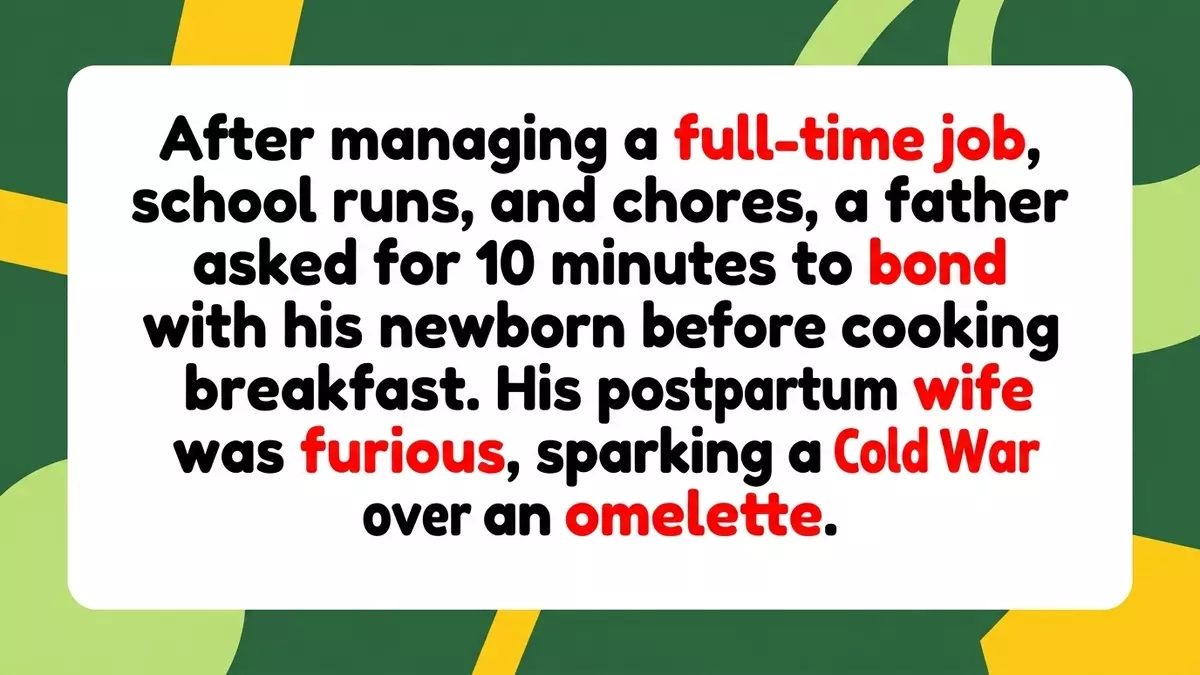
Ultimately, the "Omelette Cold War" is a powerful reminder that in the trenches of early parenthood, there are rarely clear-cut villains. On one hand, a recovering mother is managing intense physical and hormonal upheaval. On the other, a supportive partner juggling employment, household management, and childcare is bound to experience profound burnout if their efforts go completely unappreciated.
To move forward, this couple must stop litigating who had a harder morning and realize that they are fighting the same enemy: sheer exhaustion. By putting down the criticism, stepping away from the emotional ledger, and re-establishing a sense of shared teamwork, they can turn their kitchen back into a place of mutual comfort rather than a domestic battleground.
Frequently Asked Questions (FAQs)
1. Was the husband wrong to ask for a 10-minute break while his wife was waiting for food?
No, asking for a brief moment to catch your breath and connect with your child is a healthy boundary. However, because his postpartum wife was likely experiencing intense physical depletion or low blood sugar, the timing of the request collided with an immediate biological need, turning a simple pause into a point of high distress.