
Chapter 3
Conclusion: Setting Healthy Boundaries for Your Well-Being
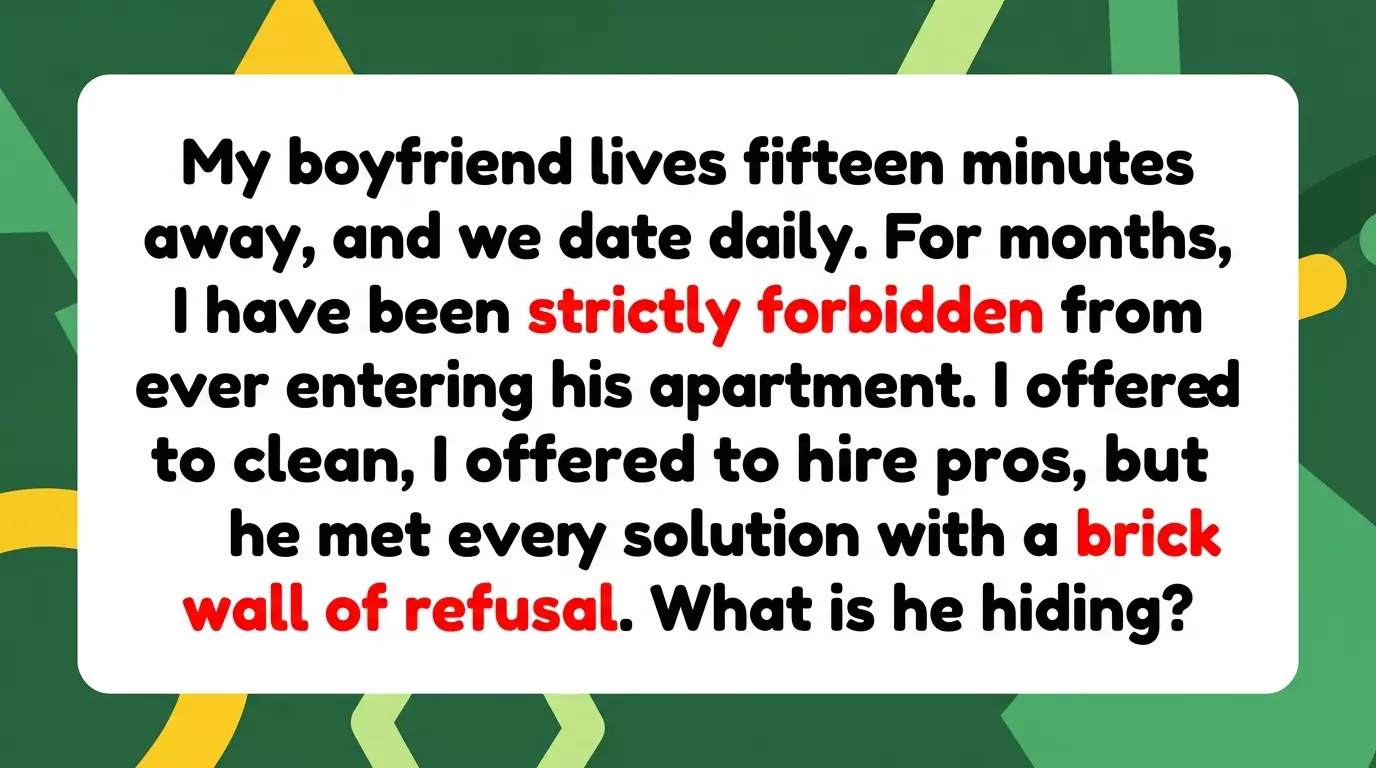
At the end of the day, a home is a reflection of a person's life, habits, and honesty. While everyone has a right to privacy and to move at their own pace in a new romance, three months of daily interaction combined with extreme physical proximity makes total exclusion a definitive red flag. Drawing a line in the sand with a clear deadline is not being unreasonable; it is an act of self-respect that forces hidden realities into the light so you can make informed decisions about your future.
Frequently Asked Questions
Is a three-month mark too early to expect to see a partner's apartment?
No. While everyone moves at a different pace, dating for three months—especially when you live only fifteen minutes apart and see each other daily—creates a reasonable expectation of basic environmental transparency and mutual trust.
What should I do if my partner claims severe anxiety is the reason they won't invite me over?
Empathy is important, but anxiety should be met with actionable steps. If they are too anxious or ashamed of their space, they should be willing to accept your non-judgmental help, hire professionals, or at least explain the exact nature of the issue clearly.
How can you distinguish between simple clutter and a severe hoarding problem?
Simple clutter consists of everyday items left out due to a busy schedule, which can typically be cleaned up in a few hours. Severe hoarding involves an inability to part with possessions, leading to cramped living conditions, structural safety hazards, and intense emotional distress at the thought of cleanup.
Why do relationship experts view home-hiding as a form of stonewalling?
Stonewalling occurs when a person completely refuses to communicate or engage on a specific topic. By completely blocking access to their physical home and rejecting every helpful compromise, a partner is shutting down a vital avenue of emotional vulnerability and relationship growth.
What are the psychological effects of being kept a secret in a relationship?
Being excluded from a partner's personal life or home can trigger feelings of inadequacy, constant self-doubt, and deep anxiety. It creates an unequal power dynamic where one partner holds all the information, ultimately damaging the rejected partner's self-esteem over time.